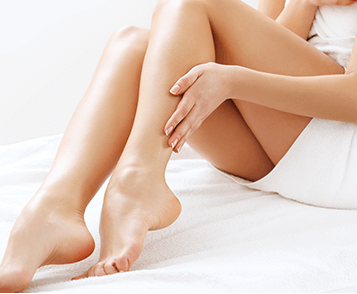
You will benefit from treatment if you have: o heavy, tired legs o aches, pain, cramps in the legs o swelling at the end of the day o small dark veins that bleed easily o venous eczema (rash) especially over the inner, lower calf You should seek medical advice, if the skin (especially over the lower leg) has become pigmented, itchy and “woody” or if the varicose veins have ever become very tender, inflamed or developed clots (thrombophlebitis)
Usually varicose veins are hereditary, with a parent or close relative also having them. Pregnancy is often the time when women first notice them and they worsen with successive pregnancies. Prolonged standing can make varicose veins a lot worse, increasing swelling and discomfort.
Over time varicose veins will worsen in symptoms and appearance. The extra weight of the blood in the enlarged veins exerts pressure on the surrounding skin and over time, this pressure can damage the skin causing eczema, staining of the skin and even skin ulcers.
A true recurrence happens when a treated vein heals itself, re-opens, and becomes incompetent again. This does happen in a small percentage of people. With good post treatment follow up, this is recognized and treated. Once your varicose veins have been treated totally new varicose veins may develop with the passage of time, and it is safe to have treatment again.
It is recommended that varicose veins be treated before pregnancy as they can become painful and troublesome in pregnancy.
The veins on the surface of the legs only drain the blood from the skin and fatty layers (about 10% of the total volume of blood in the leg). There are many veins in this level and the blood can be returned towards the heart via many different pathways.
Clari-vein mechanicochemical ablation, is a variation of sclerotherapy (vein injection).The ClariVein® catheter is inserted into the vein under ultrasound guidance. The tip of the catheter then rotates, causing the vein to go into spasm. At the same time a chemical (sclerosant) is sprayed into the vein to damage the vein wall, encouraging the vein to seal itself with scar tissue. It is a new treatment and long term follow up, or vein re-opening rate is not yet available.
Botulinum (Dysport or Botox) is certainly not just for women. Women may talk about their looks more often, but men are concerned about their appearance as well. Why shouldn’t they be? A man who goes to the gym and cares about his clothes and grooming is a man who not only cares about his appearance, but what it says about him personally, as well as in business. A man who has pronounced lines between his brows may be perceived as angry or stressed-and he doesn’t want to look that way. That’s why it’s not surprising that men are also choosing Botox or Dysport.
TDysport® or Botox® is supported by over a decade of clinical experience. Dysport or Botox was developed in the United Kingdom in the early 1990s to successfully treat a number of neurological and ophthalmic conditions. Since that time, with an increased understanding of the uses of Dysport or Botox, thousands of treatments have been safely and effectively performed for a variety of conditions ranging from frown lines to axillary hyperhidrosis (excessive sweating under the armpits). Dysport has been available in New Zealand for over 12 years and was the first botulinum toxin Type A to be approved in New Zealand for medical use.
Dysport or Botox is a protein extracted from the bacterium Clostridium botulinum. The protein was initially used for the treatment of motor disorders including cerebral palsy where it is used safely at much higher doses than is needed for wrinkle reduction treatment.
Frown lines affect not just your appearance, but also your self-esteem and even your choice of career. Botox or Dysport can help you look younger, more relaxed and in control – for around the same price per month as a cut and colour by your hairdresser. Many people with frown lines can benefit from Botox or Dysport– and it can work as well for men as it does for women. In fact many men are already experiencing the benefits of a younger, more relaxed looking appearance that Dysport can provide
The most common side effects are temporary soreness or mild bruising around the injection site. In a very small percentage of cases there can be a complication called “ptosis” (a drooping eyelid) which may last a few days or up to 4 weeks. Your doctor can give you some eye drops to relieve this.
After having a Botox® or Dysport® treatment, the frown muscles gradually relax over the next few days and you can no longer contract your frown muscles. But because you can still blink normally and raise your eyebrows, you will not look unnatural. Rather, you can enjoy a more youthful appearance while maintaining a natural expression.
Dermal fillers are soft, gel-like substances that are injected under the skin (under local anesthetic). As we age, because of bone and tissue loss, some areas of our face lose volume. Fillers help to smooth lines and replenish face volume. Fillers can last from six months to much longer before being slowly absorbed by the body.






© 2024 Vein and Laser